
The members of the Reserve Bank of India's (RBI's) Monetary Policy Committee (MPC) voiced different views on the interest rate and stance, with two of them indicating they may not vote for further rate increases even if Governor Shaktikanta Das and Deputy Governor Michael Patra maintain bringing down inflation as their primary objective, the minutes of the December review of the monetary policy showed. The other two members remained neutral. The MPC increased the policy repo rate by 35 basis points (bps) - which was lower than the previous three hikes of 50 bps. The repo rate has been hiked by 225 bps to 6.25 per cent since May this year.

The disbursement of the second tranche comes on a day when the International Monetary Fund is holding virtual discussions on Pakistan's upcoming budget, as the visit of its mission to Islamabad was delayed due to security concerns in the region.
The RBI is not statutorily independent from the government but has long enjoyed wide latitude
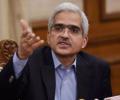
The Reserve Bank of India on Thursday decided to keep policy rate unchanged for third time in a row as it maintains heightened vigil on inflation. The rate increase cycle was paused in April after six consecutive rate hikes aggregating to 250 basis points since May 2022.
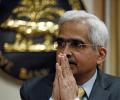
The Reserve Bank of India's rate-setting panel on Wednesday began its three-day deliberations on the next bi-monthly monetary policy amid expectations of at least a 35-basis-point hike in the interest rate to check high inflation. If raised, it will be the third consecutive hike in the repo rate -- the short-term rate at which the RBI lends money to banks. The central bank has already announced to gradually withdraw its accommodative monetary policy stance.

India's economic growth forecast for 2025 has been revised downward to 6.3 per cent, and despite a projected moderation, the country remains one of the fastest-growing large economies, supported by resilient consumption and government spending, the United Nations has said.

RBI Governor Duvvuri Subbarao on Tuesday defended the bank's decision to keep the key policy rate unchanged saying inflation could rise to above 8 per cent in the near-term.

Raghuram Rajan called for purposeful and effective action to counter the atmosphere of cynicism, which has slowed down the decision making process.

Among major Sensex movers, ITC rose the most by 1.70 per cent, Wipro by 1.43 per cent, Tech Mahindra by 1.36 per cent and Nestle India by 1.27 per cent. Other gainers included HCL Tech, Asian Paints and Reliance. On the other hand, ICICI Bank, NTPC, UltraTech Cement and Tata Steel traded with a loss of up to 0.82 per cent.

The Reserve Bank on Friday projected retail inflation to be in 5-5.2 per cent range during the first half of the next fiscal year, expecting further softening of vegetables prices in near term. Also, it has lowered the retail inflation forecast for the current January-March quarter of 2020-21 fiscal at 5.2 per cent. The Reserve Bank (RBI) has kept the key policy rate unchanged at 4 per cent, with an accommodative stance, so as to ensure that inflation remains well within the target, Governor Shaktikanta Das said while announcing the last monetary policy of 2020-21.

The Supreme Court on Tuesday said limited scope of a judicial review in economic policy matters does not mean that the court will fold its hands and sit back, observing that the manner in which a decision is taken by the government can always be examined.

Stock market analysts on Tuesday termed the RBI decision to hike policy rates by 0.25 per cent as in line with expectations and said they expect another hike in March review of the monetary policy.

India registered its protest at the board of IMF, which met on Friday to review the EFF lending programme for Pakistan.
The status quo decision came as a breather as only last week the RBI had pulled up banks for not helping it in monetary policy transmission.

It is time for India to raise its voice not just through military prowess, but through professionalism, principled voting and partnerships, asserts Deepak Mishra.

The US Federal Reserve's interest rate decision is the biggest event that would drive sentiments in the domestic stock market this week, besides a host of macroeconomic data from the global front and trading activity of foreign investors, analysts said. The Indian equity market had an exceptional last week, with both the Nifty and Sensex hitting their all-time high levels on Thursday.
With the 115 bps reduction in repo rate beginning February, banks have already transmitted 72 bps to the customers on fresh loans and some large banks have transmitted as much as 85 basis points.
'The central bank has highlighted that the slowdown in growth has been limited to a few sectors and overall growth is expected to pick up in the second half of the year.'

Citing the sharp rise in food prices, economists at a foreign bank have forecast a steeply higher retail inflation print for July, pegging it at 6.7 per cent, up 190 basis points from the previous month. Deutsche Bank India economists led by chief economist Kaushik Das, in a report on Monday ahead of the monthly inflation print and the Reserve Bank's monetary policy review, said that the July consumer price-based inflation index (CPI) is likely to print at 6.7 per cent on-year as against 4.8 per cent in June. The Reserve Bank is widely believed to leave the key interest rates unchanged for the fourth time in its upcoming bi-monthly monetary policy decision on August 10.

India is gearing up to introduce a six-member monetary policy committee that would vote on interest rates.

Gold, a safe-haven bet, is likely to continue its record-smashing journey in the New Year, rising to Rs 85,000 per 10 grams and even Rs 90,000 level in domestic markets if geopolitical tensions and global economic uncertainties continue.

A division bench of Justices Girish Kulkarni and Firdosh Pooniwalla said it was "not happy " and "surprised" with the government's stand despite orders passed by the court asking the chief minister to consider the matter as a "special case".

The Planning Commission on Tuesday said the Reserve Bank's decision to tighten the money supply will not have any impact on growth and the economy would do better than 8 per cent expansion rate projected by the central bank.

Manufacturing activities in India fell to a five-month low in September as new orders rose at a softer pace, which tempered production growth, a monthly survey said on Tuesday. The seasonally adjusted S&P Global India Manufacturing Purchasing Managers' Index (PMI) fell to 57.5 in September, down from 58.6 in August -- the lowest in five months. The September PMI data pointed to an improvement in overall operating conditions for the 27th straight month.

Amid fears of a third wave of coronavirus pandemic and hardening of retail inflation, the Reserve Bank is likely to maintain status quo on interest rate and watch the developing macroeconomic situation for some more time before taking any decisive action on monetary policy. The RBI is scheduled to announce its bi-monthly monetary policy review on August 6 at the end of the three-day meeting -- August 4-6 -- of the Monetary Policy Committee (MPC). The RBI Governor-headed six-member MPC decides on the key policy rates.

'The prime minister's comment on 'revdi culture' was welcome. But I am disappointed he did not follow up on that.' 'All political parties, including the BJP, have been guilty of this.' 'Now, Modi's guarantees, the Congress's 'nyay' path and both ruling and Opposition parties are vying with each other for freebies in my home state Andhra Pradesh.'

Stock markets will be driven by quarterly earnings by index majors, global trends and the RBI's interest rate decision this week after digesting news on budget proposals and US Federal policy outcome, say analysts. The trading activity of foreign investors and the movement of global oil benchmark Brent crude would also dictate trends in equities. "On the domestic front, the MPC (Monetary Policy Committee) meeting is scheduled from February 6-8.

Industry is demanding a cut in repo rate to help revive India's sagging GDP growth that hit decade's low of 4.5 per cent in the third quarter of 2012-13.

Shares of state-owned bank stocks were under pressure on Monday due to muted deposit and credit growth numbers reported by these lenders in the October-December quarter (Q3) of 2024-25 (FY25). The Nifty PSU Bank index was down 4 per cent, with Union Bank of India emerging as the biggest loser as its shares fell 7.5 per cent to close at Rs 114.7, followed by a 5.7 per cent drop in shares of Bank of Baroda (BoB) to Rs 228 and a 4.7 per cent slide in shares of Bank of India to Rs 99.8 on the National Stock Exchange.
He doesn't expect banks to raise interest rates, as they'd not reduced these after the policy rate cuts in May and March.

The RBI on Wednesday cautioned that while the Indian economy appears capable of weathering the deterioration in geopolitical conditions amid the ongoing Russia-Ukraine war, it faces headwinds from global spillovers from geopolitical tensions, elevated commodity prices and moderating external demand. The RBI, however, did not tinker with the GDP growth projection made in April. It had slashed the GDP growth projection for the fiscal 2022-23 to 7.2 per cent from its earlier forecast of 7.8 per cent.

The services sector growth in India fell to a one-year low in November on softer expansions in new work intakes and output, despite receding price pressures, a monthly survey said on Tuesday. The seasonally adjusted S&P Global India Services Business Activity Index fell from 58.4 in October to a one-year low of 56.9 in November. Despite witnessing a month-on-month decline, the rate of expansion was stronger than its long-run average.

The domestic stock market may face volatility amid the monthly derivatives expiry scheduled this week, while investors would mainly await the outcome of RBI's interest rate decision on Friday, said analysts. Global market movement would also continue to drive sentiment amid a bearish trend recently following rate hikes by the US Federal Reserve and other central banks. The Reserve Bank of India (RBI) may take cues from its global counterparts to raise interest rate for the fourth time in a row to control inflation.
The Reserve Bank of India has postponed the meeting of its interest rate setting Monetary Policy Committee by a day to August 3 due to administrative exigencies. The RBI said the decision of the MPC will be known on August 5 as against the earlier schedule of August 4. "Due to administrative exigencies, it has been decided to reschedule the MPC meeting from August 2-4, 2022 to August 3-5, 2022," RBI said in a statement on Thursday.

Equities went into a tailspin on Wednesday after the Reserve Bank surprised the market with a mid-cycle rate hike in a bid to tame soaring inflation.

A bench of Justices Sanjiv Khanna and SVN Bhatti, which reserved its verdict on two separate regular bail pleas of Sisodia in the corruption and money laundering cases, told the ED it cannot go by the assumption of bribe having been paid, and whatever protection an accused enjoys under law needs to be granted.

Reserve Bank is scheduled to announce its bi-monthly monetary policy on August 3.

'Even now, investors are not bothered about the war but are more concerned whether it will remain localised or not.' 'In case things are contained, markets can stage a bounce back in the next few days.'
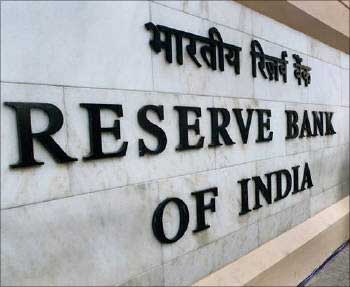
In policy review meet in June, RBI Governor Raghuram Rajan kept interest rates intact.

Markets continued to fall on Monday, with the Sensex declining 94 points as investors remained cautious amid unabated selling by foreign funds and elevated crude oil prices ahead of the RBI's policy decision later this week. The 30-share BSE Sensex declined 93.91 points or 0.17 per cent to end at 55,675.32. During the day, it tanked 473.49 points or 0.84 per cent to 55,295.74.
